
Façade defects · Cladding
Render cracking and debonding: causes, risks and repair.
Why render cracks, sounds hollow or bulges, what it means for water and fire safety, and how opening up the render shows what is behind it.
| At a glance | |
|---|---|
| What it is | Cracks, hollow areas, bulges or detachment in render, including render on external wall insulation. |
| Main risk | Pieces of render falling, water getting behind it, and unknown insulation underneath. |
| Common on | Apartment blocks, hotels and mixed-use buildings from the 2000s and 2010s. |
| Usually spotted by | Managing agents, condition surveys and FRAEWs. |
Two kinds of render
Traditional render is applied directly to masonry. External wall insulation systems apply a thin render over insulation boards, held by adhesive and fixings. They look similar but fail differently, and the insulation behind the second kind matters for fire safety.
How to recognise it
- Hairline or map cracking across the surface.
- Diagonal cracks from window and door corners.
- Areas that sound hollow when tapped.
- Bulges, blisters or detached patches.
- Staining or algae where water is getting in.
Why it happens
- No movement joints, or too few.
- Different backgrounds under one render, such as blockwork and concrete.
- Poor bonding or surface preparation.
- Water getting behind the render at copings, sills and junctions.
- On insulation systems: mesh not lapped, too few fixings, or impact damage.
Why it matters
- Safety. Detached render can fall.
- Water ingress into the wall behind.
- Fire safety. The insulation behind rendered insulation systems is appraised under PAS 9980. See combustible insulation.
How we investigate it
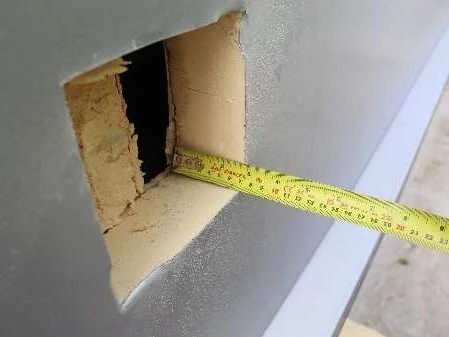
We survey every rendered elevation, mapping cracks and tapping to find hollow areas. Openings cut through the render record the build-up layer by layer and identify any insulation and product markings. Where the render is part of a FRAEW, the same openings serve both reports.
How it is put right
- Repair cracks and redecorate.
- Cut back and patch hollow areas.
- Strip and re-render with movement joints where failure is widespread.
- For insulation systems, repairs by an approved installer to the system's details.
From our investigations
Examples from our own work. Client and building details are withheld.
See our published case studies
What to send us
The address, photos of the cracking, the building's age, and any previous reports. Email enquiries@mtconsult.co.uk, use our contact form or call 0800 048 5229. We typically respond within one working day.
Frequently asked questions
Are hairline cracks a problem?
Not always, but they let water in over time and should be recorded and monitored.
Why does the render sound hollow?
It has lost its bond with the wall behind. Hollow areas can come away and need attention.
Is rendered insulation a fire risk?
It depends on the insulation. Opening up confirms it.
Related
Talk to us
Cracks appearing in your render?
Our in-house contracting team provides the access and opening-up, so you have one point of contact.