
Façade defects · Water ingress
Water ingress at windows and wall junctions: causes, risks and repair.
Why water gets in around windows, doors and the joints between wall systems, why the stain is rarely where the leak starts, and how opening up and water testing find it.
| At a glance | |
|---|---|
| What it is | Rainwater getting in around windows, doors, balconies or where two wall systems meet. |
| Main risk | Hidden damage to insulation, frames and linings, mould, and repeated failed repairs. |
| Common on | Apartment blocks and mixed-use buildings with several façade systems. |
| Usually spotted by | Residents, managing agents and facilities teams after heavy rain. |
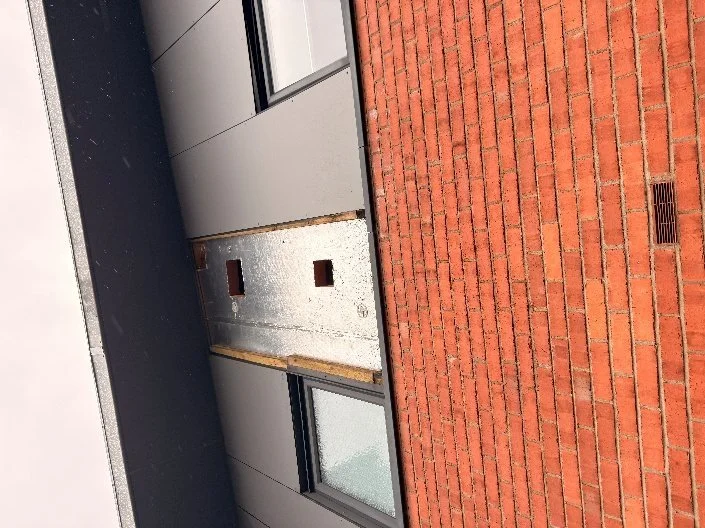
Why junctions leak
Walls, windows and roofs are each designed to shed water. Where they meet, the water has to be passed from one to the next by trays, membranes, flashings and seals. If any of these is missing, poorly lapped or failed, water runs inside the wall and appears somewhere else, often well away from where it got in.
How to recognise it
- Staining or damp below window corners and sills.
- Wet or mouldy reveals, skirtings or ceilings.
- Leaks only in wind-driven rain, or on one elevation.
- Bubbling paint or swollen timber around frames.
- Leaks that keep returning after resealing.
Why it happens
- Missing or failed cavity trays, stop ends and weep holes.
- Membranes that are not lapped or sealed to the window frame.
- Sills without upstands or with failed end seals.
- Failed perimeter seals around frames.
- Poorly detailed junctions between cladding, curtain walling, balconies and roofs.
Why it matters
- Hidden damage. Wet insulation, corroding fixings and rotting linings can go unseen for years.
- Health. Damp and mould affect residents.
- Wasted spend. Sealing the outside often moves the leak rather than stopping it.
How we investigate it
- Records and leak history. We review drawings, previous reports and every reported leak.
- Opening up. Our in-house team removes panels and exposes the interfaces between systems, where water most often gets in.
- Water testing. Targeted tests reproduce the reported leaks while we watch inside.
- Root cause report. Every location is logged and photographed, with the mechanism and fix set out system by system.
How it is put right
- Reinstating cavity trays, stop ends and membranes at the leaking interfaces.
- Replacing failed seals and sill details.
- Planned repairs system by system, rather than blanket resealing.
From our investigations
Examples from our own work. Client and building details are withheld.
See our published case studies
What to send us
The address, where and when the leaks appear, photos, and any previous reports or repairs. Email enquiries@mtconsult.co.uk, use our contact form or call 0800 048 5229. We typically respond within one working day.
Frequently asked questions
Why is the stain nowhere near the leak?
Water travels inside the wall along trays, frames and membranes before it appears. That is why opening up and testing find the source.
Will water testing damage the building?
No. Tests are controlled and targeted, and we watch inside so they stop as soon as the leak shows.
Is it a defect or a maintenance issue?
The investigation shows which, and that matters for warranty claims and who pays.
Related
Talk to us
A leak you can't pin down?
Our in-house contracting team provides the access and opening-up, so you have one point of contact.