
Façade defects · Cladding
Loose or damaged rainscreen panels: causes, risks and repair.
Why rainscreen panels work loose or get damaged, when it becomes a safety risk, and how a close-up condition survey prioritises the repairs.
| At a glance | |
|---|---|
| What it is | Cladding panels that have moved, cracked, lost fixings or been damaged. |
| Main risk | A panel or fragment falling from height, and water getting behind the cladding. |
| Common on | Rainscreen-clad offices, towers and apartment blocks. |
| Usually spotted by | Building managers, residents, or a condition survey. |
How rainscreen panels are held
Rainscreen panels hang on rails and brackets, held by rivets, clips, hooks or adhesive. They are designed to move a little with temperature. When the fixings fail, or movement is restrained, panels shift, crack or come loose.
How to recognise it
- Panels that rattle or move in the wind.
- Misaligned joints and uneven gaps between panels.
- Missing panels or visible missing fixings.
- Cracked, dented or bowed panels.
- Fragments found at the foot of the building.
Why it happens
- Failed or corroded fixings.
- Thermal movement with no allowance in the fixings.
- Impact damage from vehicles, cleaning cradles or maintenance.
- Poor installation, such as too few fixings.
- Wind loads beyond what the fixings were designed for.
Why it matters
- Public safety. A loose panel at height must be made safe quickly.
- Water ingress behind displaced panels.
- Fire safety. Replacement panels must meet current rules, which can affect the FRAEW.
How we investigate it
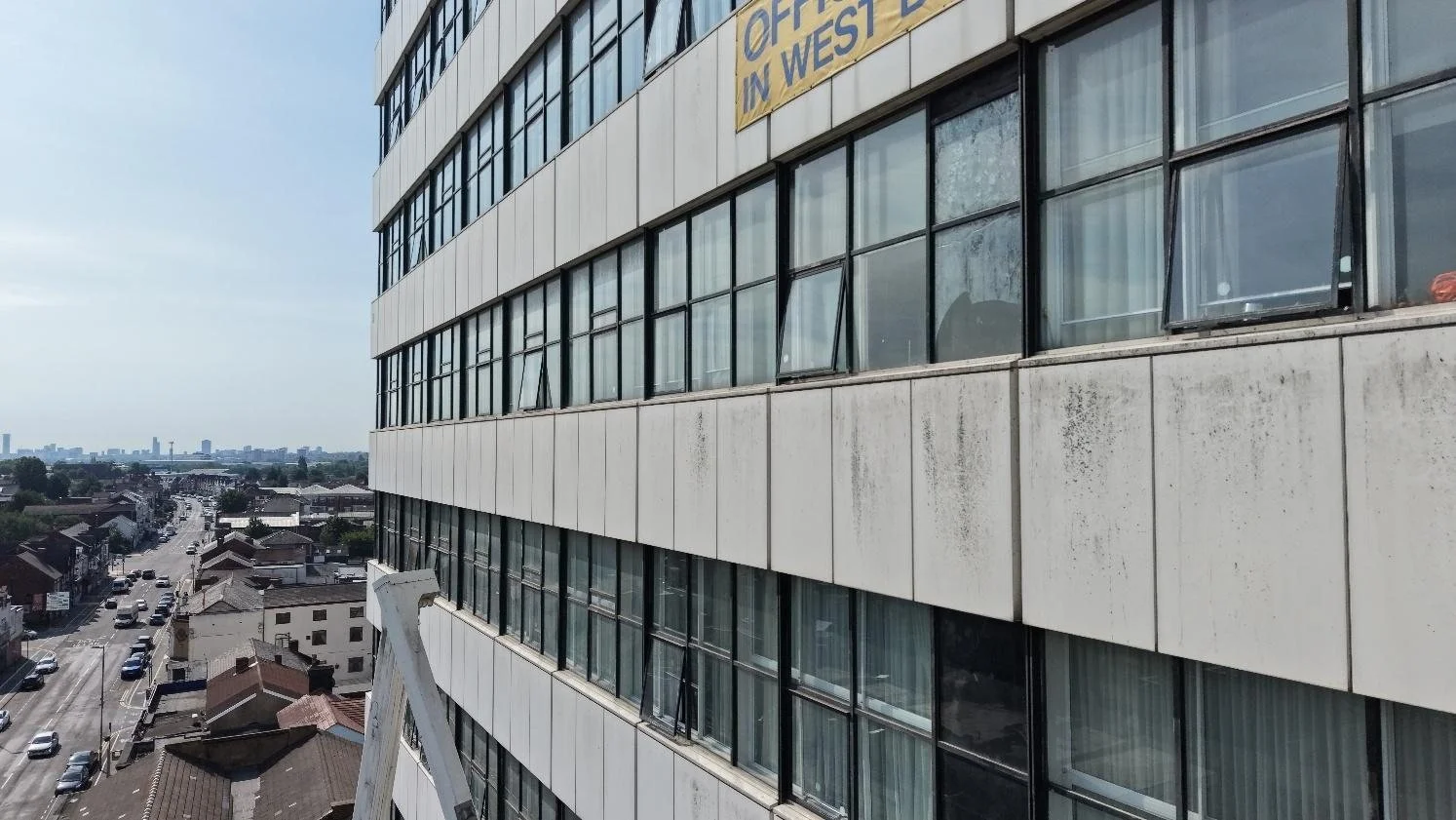
We inspect every elevation close-up from powered access or the building maintenance unit, checking panels and fixings by hand where we can reach them. Every observation is photographed and located on the elevations. Health and safety actions come first in the report, followed by longer-term repairs and order-of-cost budgets.
How it is put right
- Make safe: remove or secure loose panels immediately.
- Refix panels with the correct fixings.
- Replace damaged panels with compliant materials.
- Set a periodic inspection regime.
From our investigations
Examples from our own work. Client and building details are withheld.
See our published case studies
What to send us
The address, which panels are affected, photos, and any previous condition reports. Email enquiries@mtconsult.co.uk, use our contact form or call 0800 048 5229. We typically respond within one working day.
Frequently asked questions
Is a loose panel urgent?
Yes if it is at height over a public area. It should be made safe straight away and then investigated.
Can we replace a panel like for like?
Only if the original meets current fire safety rules. Otherwise the replacement must be a compliant material.
How often should cladding be inspected?
The condition survey sets a frequency based on the building, its exposure and what we find.
Related
Talk to us
Panels on the move on your building?
Our in-house contracting team provides the access and opening-up, so you have one point of contact.