
Façade defects · Cladding
Timber cladding and screen decay: causes, risks and repair.
Why timber cladding and screens rot, split and lose their fixings, and how a fixing-by-fixing survey turns into a costed repair scope.
| At a glance | |
|---|---|
| What it is | Rot, splitting, distortion and loose fixings in timber cladding, screens and louvres. |
| Main risk | Boards falling, faster decay, and the fire risk of timber on residential buildings. |
| Common on | Car parks, offices and residential schemes from the 2000s onwards. |
| Usually spotted by | Building managers and condition surveys. |
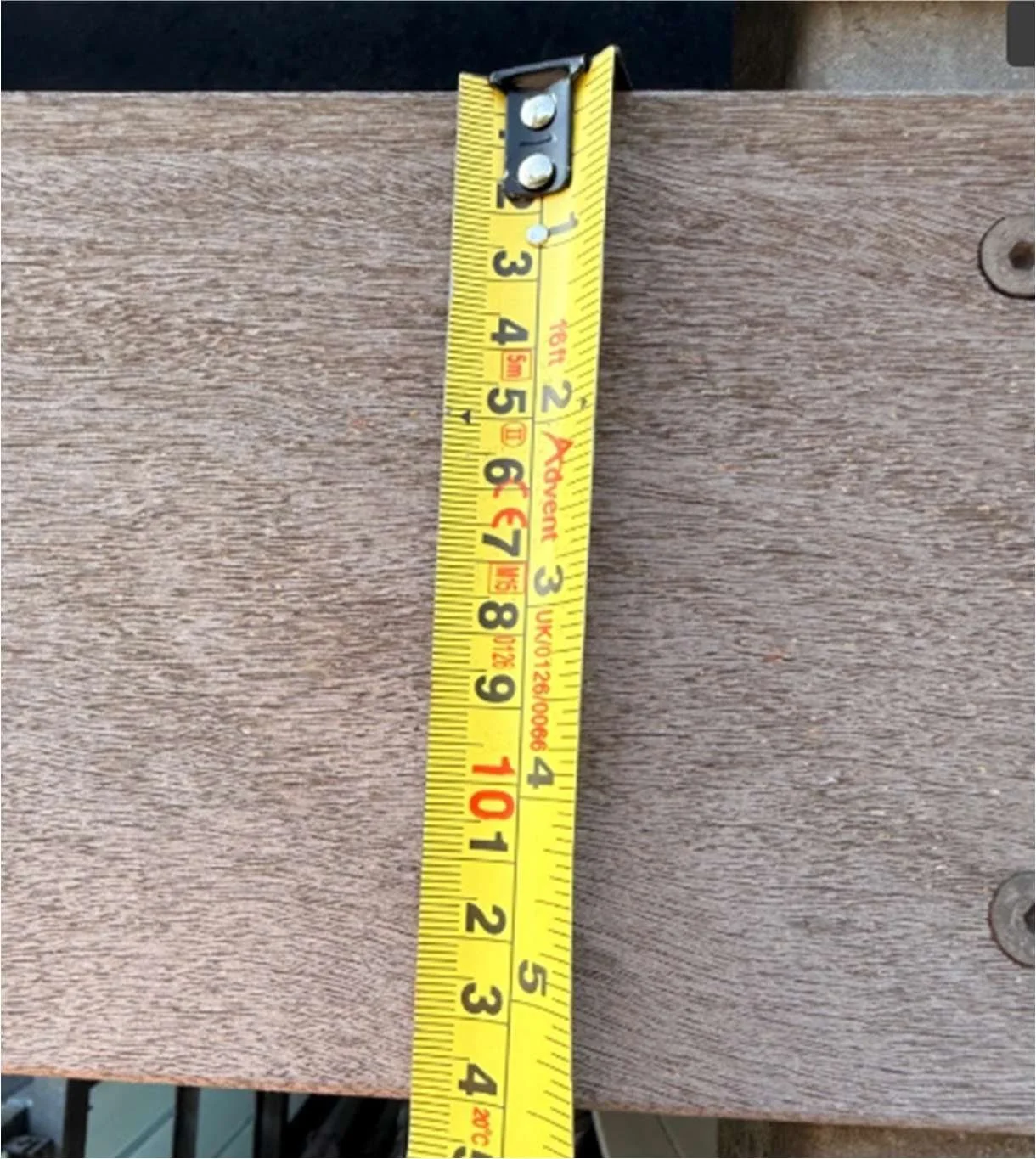
How timber cladding decays
Timber lasts well when it can dry out. It decays where water is trapped: at joints, board ends, fixings and anywhere dirt and leaves collect. The fixings matter too: some timbers attack plain steel fixings, which then stain and fail.
How to recognise it
- Soft or crumbling timber, especially at board ends.
- Splits, cupping and warping.
- Dark staining and algae.
- Rust streaks from fixings.
- Loose, missing or dropped boards.
Why it happens
- Details that trap water.
- Little or no maintenance or recoating.
- Timber species or treatment unsuited to the exposure.
- Corroding fixings.
Why it matters
- Safety. Loose boards can fall.
- Fire. Timber is combustible. On residential buildings it is appraised as part of the external wall, and on many over 18 metres it is restricted.
- Cost. Small repairs left too long become full replacement.
How we investigate it
We survey every floor and elevation, both faces where possible, probing for soft timber and recording fixing types and depths. The findings become quantities for each elevation, a remedial specification and an access and permits plan, priced with a specialist contractor so the client has a figure to budget against.
How it is put right
- Replace decayed boards.
- Refix with stainless steel fixings.
- Treat and recoat on a planned cycle.
- Replace with a non-combustible alternative where fire safety or long-term cost justifies it.
From our investigations
Examples from our own work. Client and building details are withheld.
See our published case studies
What to send us
The address, photos of the timber, the building's use and height, and any previous reports. Email enquiries@mtconsult.co.uk, use our contact form or call 0800 048 5229. We typically respond within one working day.
Frequently asked questions
Repair or replace?
It depends on the extent of decay, the fixings and fire safety. The survey sets out both, with costs.
Is timber cladding a fire risk?
On residential buildings it can be, and it is appraised as part of the external wall.
How often should timber be maintained?
It depends on the species and exposure. The report sets a maintenance cycle.
Related
Talk to us
Timber cladding past its best?
Our in-house contracting team provides the access and opening-up, so you have one point of contact.