
Case study · Stone condition assessment · City of London
A 1925 cast-stone façade, assessed and given a plan for its care.
McKay Turner Consulting was appointed to assess the condition of the retained cast-stone elevations at The Northcliffe, a 186,700 sq ft Grade A office in the City of London, and to give the managing agent a prioritised programme of repair, cleaning and maintenance.
The building
A former newspaper headquarters, reborn as a modern workplace
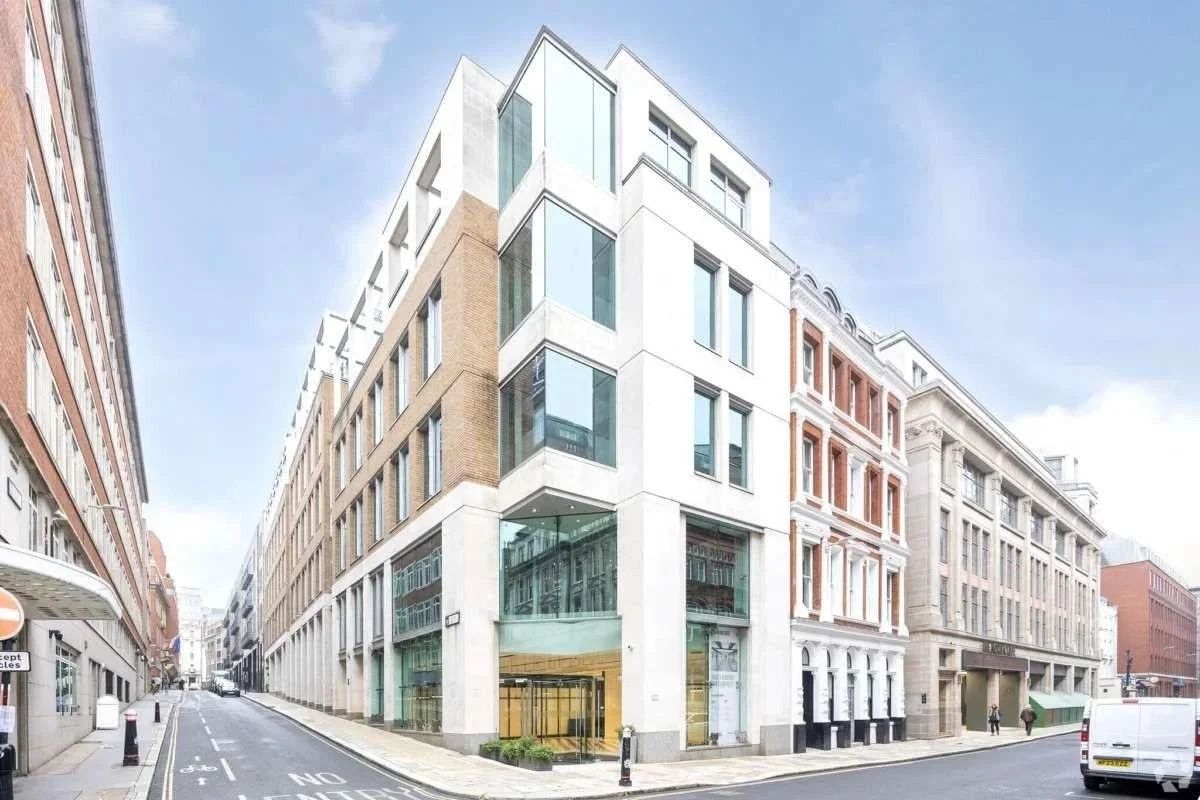
The Northcliffe began life in 1925 as a newspaper headquarters between Fleet Street and Blackfriars. A major redevelopment has turned it into a 186,700 sq ft Grade A office over a ground floor and six upper storeys, with landscaped terraces on the upper levels and a 4,200 sq ft roof terrace.
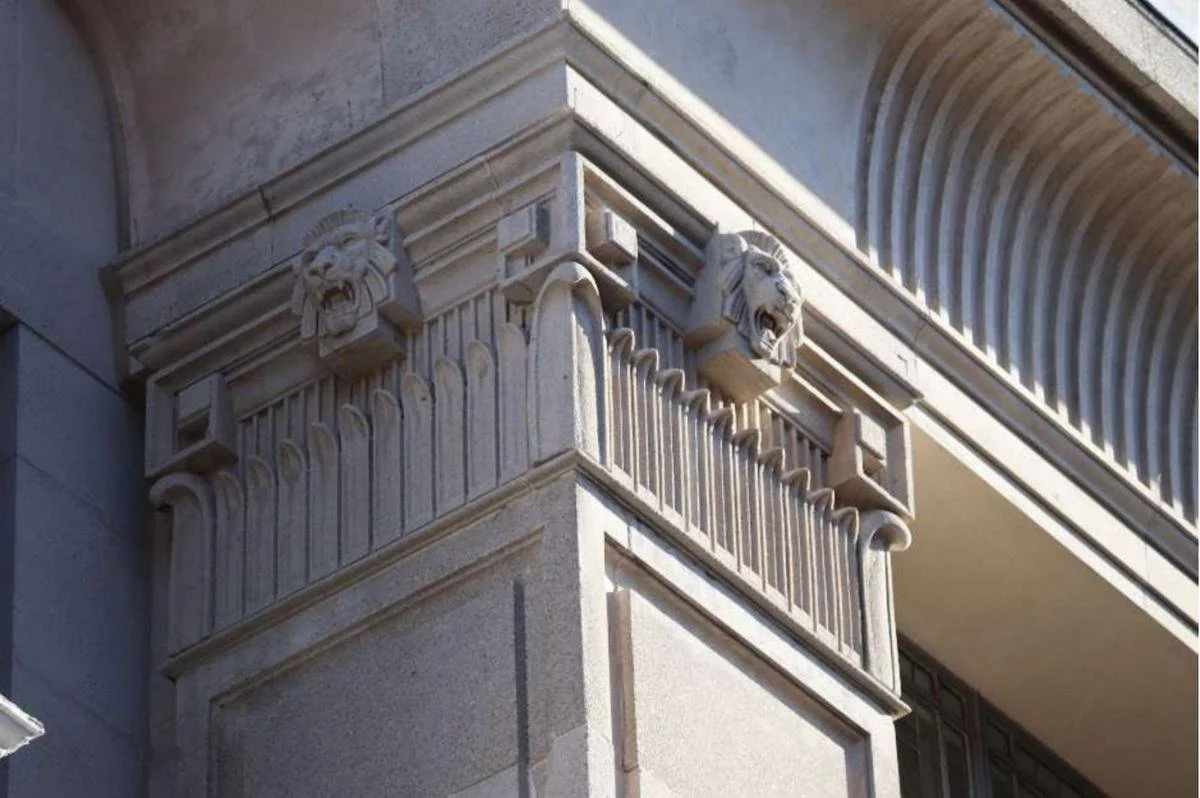
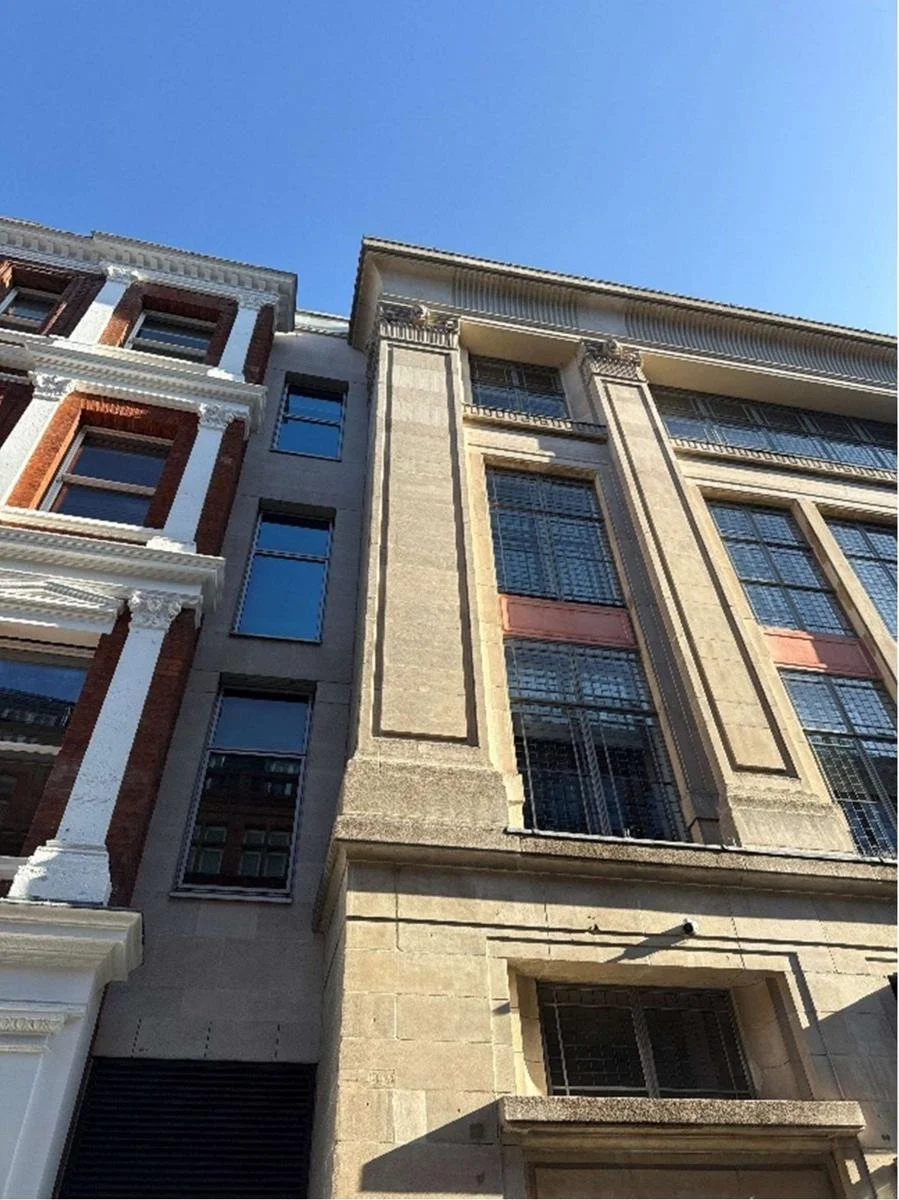
The retained façade is formed of Atlas White Portland cement cast stone, with decorative pilasters, cornices and lion's-head mouldings that give the building its character. It fronts three streets, and its condition matters both to the building's appearance and to the people walking beneath it.
The brief
The stone's condition today, and what to do about it
The managing agent asked for a stone condition assessment of all three elevations: a record of the stonework's condition, any health and safety concerns, and recommendations prioritised so they could be fed straight into the building's planned maintenance programme.
The inspection was arranged within days of instruction and carried out in a single day on site.
How we did it
Elevation by elevation, stone by stone
We walked each elevation in turn, recording the condition of the stone at street level and using a long lens to inspect ledges, cornices and mouldings above. Every observation was photographed and located, so the client's team and their contractors can find it again.
Because cast stone behaves differently from natural stone, we looked specifically at how it had weathered, where water was being concentrated by sills, cappings and fixings, and how previous repairs had performed, so that the recommendations suited this material and this building.
Instruction & planning
Scope agreed and the inspection date fixed within days of instruction.
Street-level inspection
All three elevations surveyed close-up, with every observation photographed and located.
High-level review
Cornices, ledges and lion's-head mouldings inspected by long lens from the street.
Prioritised report
Findings reported by elevation, with recommendations ranked by priority and timescale.
The outcome
Reassurance on safety, and a programme the client can plan around.
The stonework was found to be in fair condition for its age, with no immediate health and safety defects and no urgent works required. The report sets out a planned programme of local repair, water-management work and specialist cleaning, ranked into priority tiers with timescales, and supported by periodic close-access inspections.
Each recommendation is tied to the planned maintenance schedule, so the client has both an independent record of the façade today and a clear, costed route to keeping it that way.
A century-old façade, fully recorded and given a plan for the next decade.
Work with us
Need an independent view of your building's stonework?
McKay Turner Consulting carries out stone and façade condition assessments, defect investigations, planned maintenance inspections, PAS 9980 external wall appraisals and EWS1 assessments for buildings of every age and height.