
Case study · Façade defect investigation · Liverpool
Persistent water ingress, traced to its root cause.
McKay Turner Consulting was appointed to find the source of recurring water ingress through the glazed curtain walling at 101 Old Hall Street, a 135,000 sq ft office building in Liverpool's commercial district, and to set out costed options for putting it right.
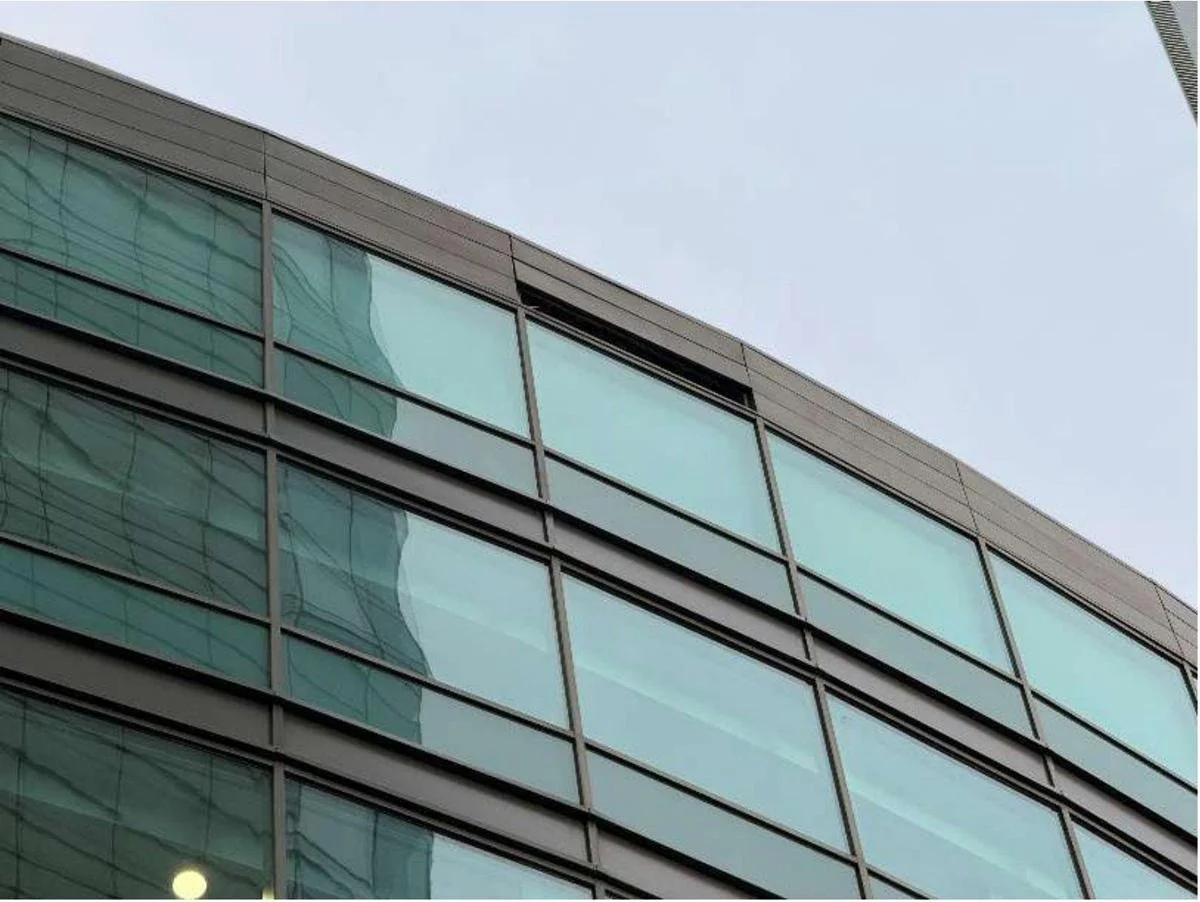
The building
A riverside office with a glazed curtain wall from the early 2000s
101 Old Hall Street is a purpose-built office of around 135,000 sq ft in Liverpool's central business district, completed in 2004 and standing close to the Mersey waterfront. Its elevations are clad in a site-assembled (stick) aluminium curtain walling system, curved to the riverside and flat to the street, with fixed glazing and spandrel panels at each floor.
Water ingress through the façade had proved persistent. Several rounds of repair had been attempted, but the leaks kept returning.
The brief
Find the source, and say whether it is a build defect or an ageing one
The managing agent asked us to identify the root cause of the water ingress, to advise whether it stemmed from the original installation or from the age of the system, and to recommend remedial options with indicative costs.
That meant going beyond a visual inspection: testing the façade under controlled conditions, opening it up where the water was getting in, and checking what we found against the manufacturer's original installation guidance.
How we did it
Hose testing, strip-back and a proven repair, all in one visit
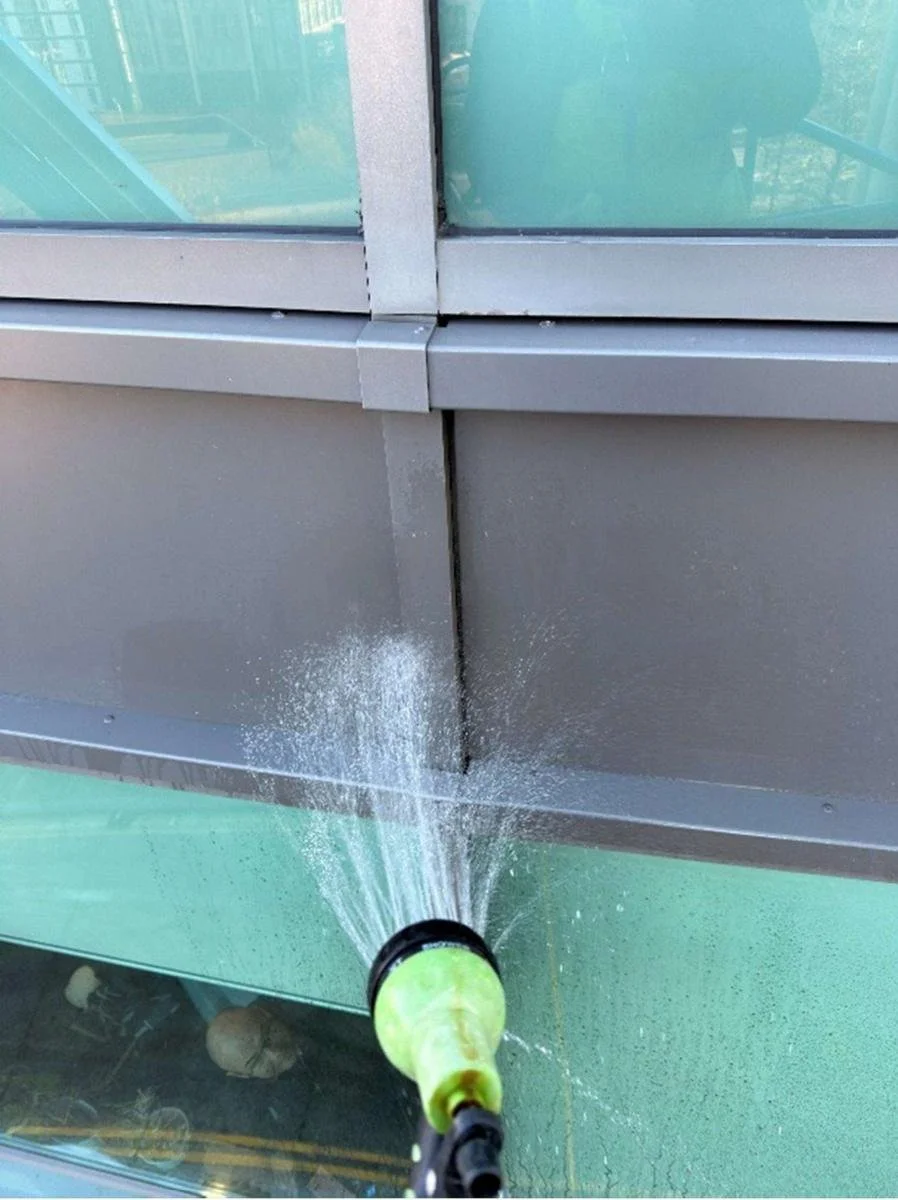
We began inside, mapping the staining on the frames and glass to find where water had been tracking in, and lifting the perimeter heating grilles to check beneath. Those locations set the targets for hose testing to CWCT Section 9 and AAMA 501, which reproduced the ingress within about three minutes.
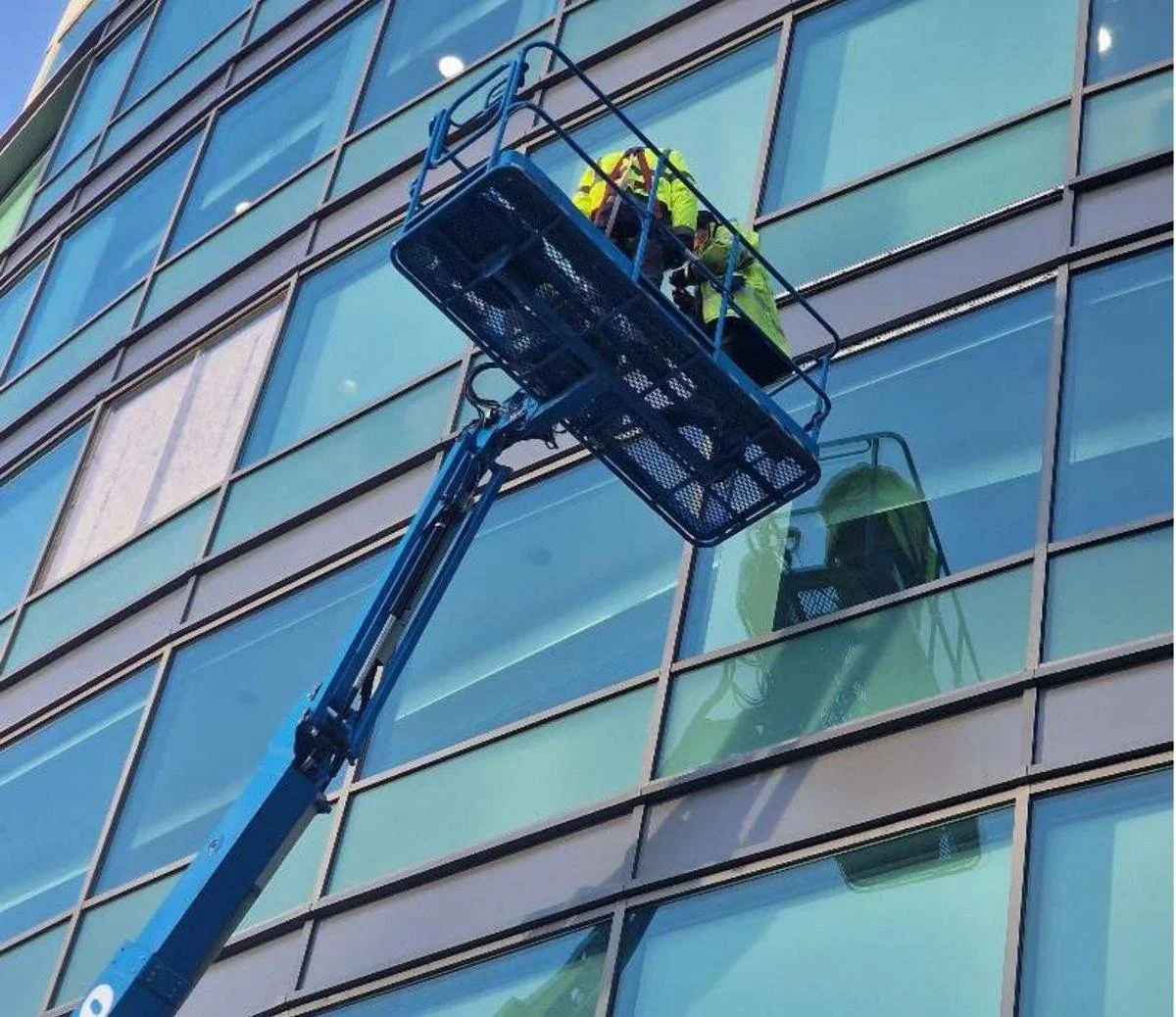
With the leak paths confirmed, we removed cover caps and pressure plates at the live locations to see the framing junctions as installed, and compared the detail with the system manufacturer's original installation guidance, which we had tracked down ahead of the visit. We then made a local repair in line with that guidance, reinstated the system and re-tested. Each repaired area passed.
Desk study & internal survey
Original installation guidance obtained; internal staining mapped to target the testing.
Hose testing
Cruciform junctions tested to CWCT Section 9 and AAMA 501; ingress reproduced and located.
Strip-back & diagnosis
Pressure plates removed at live locations; junction details checked against the manufacturer's guidance.
Repair, re-test & report
Local repair made and passed on re-test; findings and three costed options reported.
The outcome
A root cause the client could act on, not another round of guesswork.
The investigation traced the ingress to the sealed junctions between framing members behind the pressure plates, a detail that depends entirely on the quality of the original site sealing and that previous repairs had never reached. The report sets out the evidence, explains why the earlier repairs had not worked, and gives a clear view on how much is down to the original installation and how much to twenty years in a marine environment.
Three remediation options were presented, from full refurbishment of the curtain walling to targeted repair of affected areas, each with an indicative cost, so the client could weigh outlay against outcome and plan the work with confidence.
Tested, opened up, repaired and re-tested on site, with the fix proven before the report was written.
Work with us
Water getting in and nobody can say why?
McKay Turner Consulting investigates façade defects and water ingress, carries out condition surveys, PAS 9980 external wall appraisals and EWS1 assessments, and manages remediation for buildings of every height.